
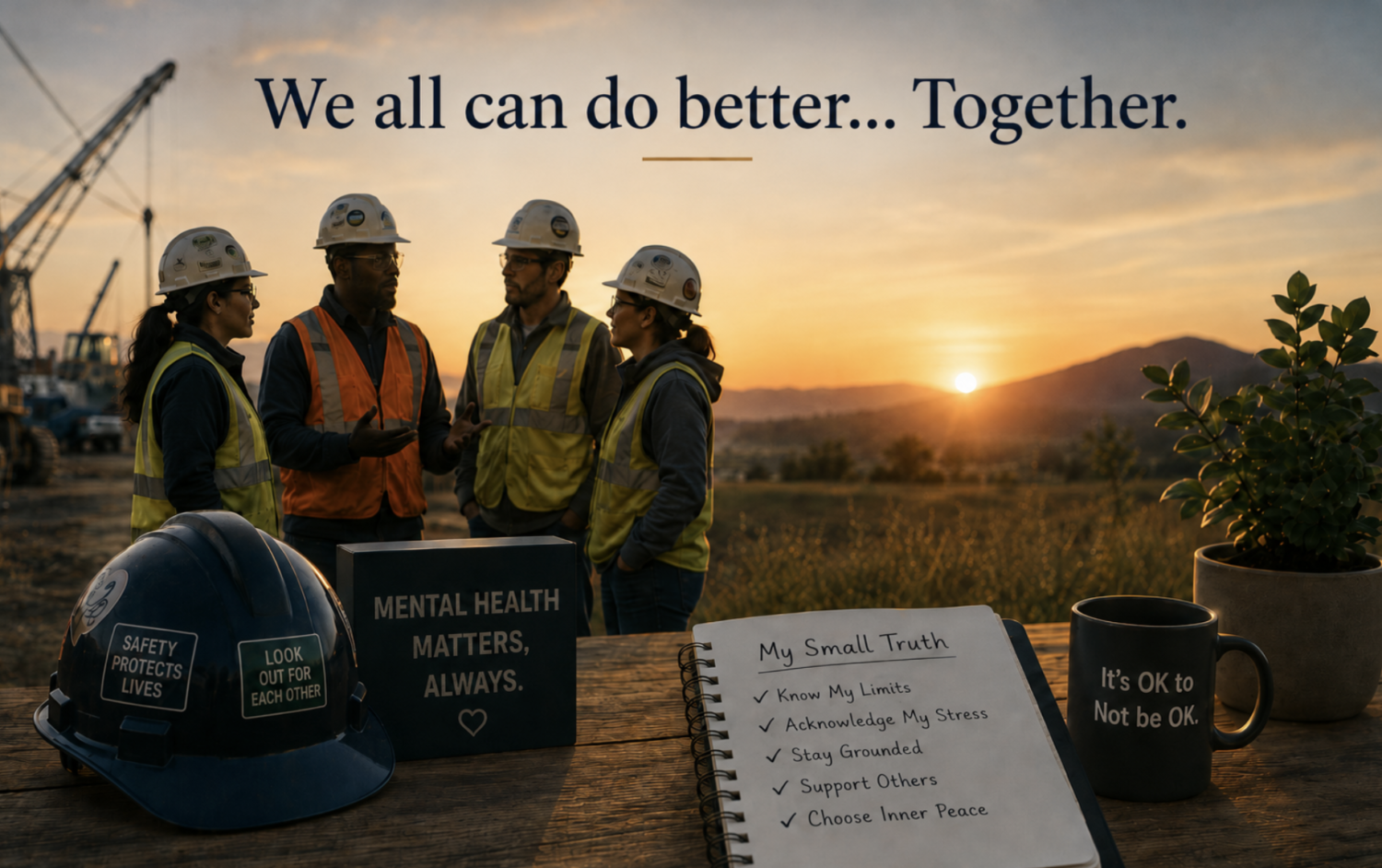
One Small Truth: Polly Ayres on Inner Peace and Mental Health in the Construction Industry
It has taken decades for safety in construction to become the first-class priority it is today. That kind of progress did not happen overnight. It took uncomfortable conversations, committed advocates, consistent education, and a willingness to challenge long-standing mindsets.
For Polly Ayres, President of Colorado Construction & Design™ Magazine, the industry’s progress around physical safety offers an important reminder and an even greater responsibility.
“My hope is that maturing around mental health in our industry will move much faster,” Ayres says.
With supporters and advocates willing to speak openly, listen without judgment, and remind others that it is okay to not be okay, Ayres believes the construction industry has a real opportunity to create meaningful change. Mental health, she says, deserves the same level of care, attention, and respect that physical safety has earned on every jobsite, in every office, and throughout every corner of the industry.
But lasting change requires more than awareness. It requires vigilance, communication, compassion, and personal reflection. Before people can fully support others, Ayres believes they must also be willing to understand their own limits, acknowledge their own stress, and recognize what helps them remain grounded.
For her, that journey has led to one small truth.
A Personal Journey of Inner Peace
On a personal level, Ayres says one small truth she has come to understand over the years is the importance of protecting inner peace at work and at home.
“As a person who has put my own mental health under a microscope, this realization feels especially invigorating,” she says. “It has given me renewed strength in places where I once felt I had none left.”
Ayres is quick to acknowledge that protecting inner peace is not something she expects to perfect. It is a practice, not a finish line. But learning to recognize and respect her own limits, understand what creates undue stress, and accept that it is okay to set boundaries for her well-being has become priceless.

What Inner Peace Really Means
Protecting inner peace, Ayres explains, is not about avoiding something, someone, or a specific situation. It is a conscious decision. It is a way of recapturing power, clarity, and the ability to show up as the healthiest version of oneself.
It means learning when to pause, when to step back, when to speak up, and when to let go. It means respecting personal limits without guilt.
Sometimes, it means choosing peace over proving a point.
Sometimes, it means giving yourself permission to rest before you are completely depleted.
“That kind of maturity is not weakness,” Ayres says. “It is wisdom.”
Finding Inner Peace at Work
In the workplace, protecting inner peace can look different depending on a person’s role, responsibilities, and circumstances. For some, it may mean recognizing when certain tasks, conversations, or responsibilities are better delegated to someone else.
Ayres emphasizes that this is not avoidance.
Instead, she sees it as a thoughtful and diplomatic way to listen to what the mind and body are communicating, preserve energy, and allow the right people to step in where they are best equipped to help.
Leadership, she says, does not require carrying every burden alone. Sometimes, the healthiest and most effective decision is knowing when to release what no longer needs to sit solely on one person’s shoulders.
Protecting Peace Beyond the Workplace
Away from work, protecting inner peace may look like recognizing when it is time to pause, step back, ask for help, or create space before stress begins to outweigh well-being.
Again, Ayres stresses that this is not avoidance. It is a conscious and healthy choice to listen to what the mind and body are saying while remaining connected to the version of oneself that has been rebuilt, strengthened, and protected through hard work.
Protecting inner peace does not mean shutting people out or pretending challenges do not exist. It means learning how to respond with clarity instead of exhaustion, with patience instead of pressure, and with self-respect instead of guilt.
Where Broader Change Begins
That kind of personal awareness, Ayres believes, is where broader change begins. When people learn to protect their own peace, they become better equipped to show compassion, recognize struggle in others, and help create healthier spaces for the people around them.
The construction industry has already proven that it can mature, adapt, and change when the issue is important enough. Ayres believes mental health deserves that same commitment.
“We can mature as an industry around mental health just as we have matured around safety,” she says.
The goal is to create spaces where people feel safe enough to be honest, vulnerable enough to ask for help, and supported enough to keep going.
- It is okay to not be okay.
- It is okay to have bad days.
- It is okay to feel.
- It is okay to be vulnerable.
- It is okay to ask for help.
It is more than okay to protect your inner peace.
Ayres closes with gratitude for those willing to keep the conversation going.
“Thank you for taking the time to read, reflect, and continue the conversation around mental health, inner peace, and the importance of supporting one another,” she says.